Roman baths were designed for bathing and relaxing and were a common feature of cities throughout the Roman empire. Baths included a wide diversity of rooms with different temperatures, as well as swimming. The Role of Aqueducts in Roman Bathrooms The magnificence of Roman baths and latrines highlights the impressive design of Roman aqueducts, a vital element of Roman sanitation.
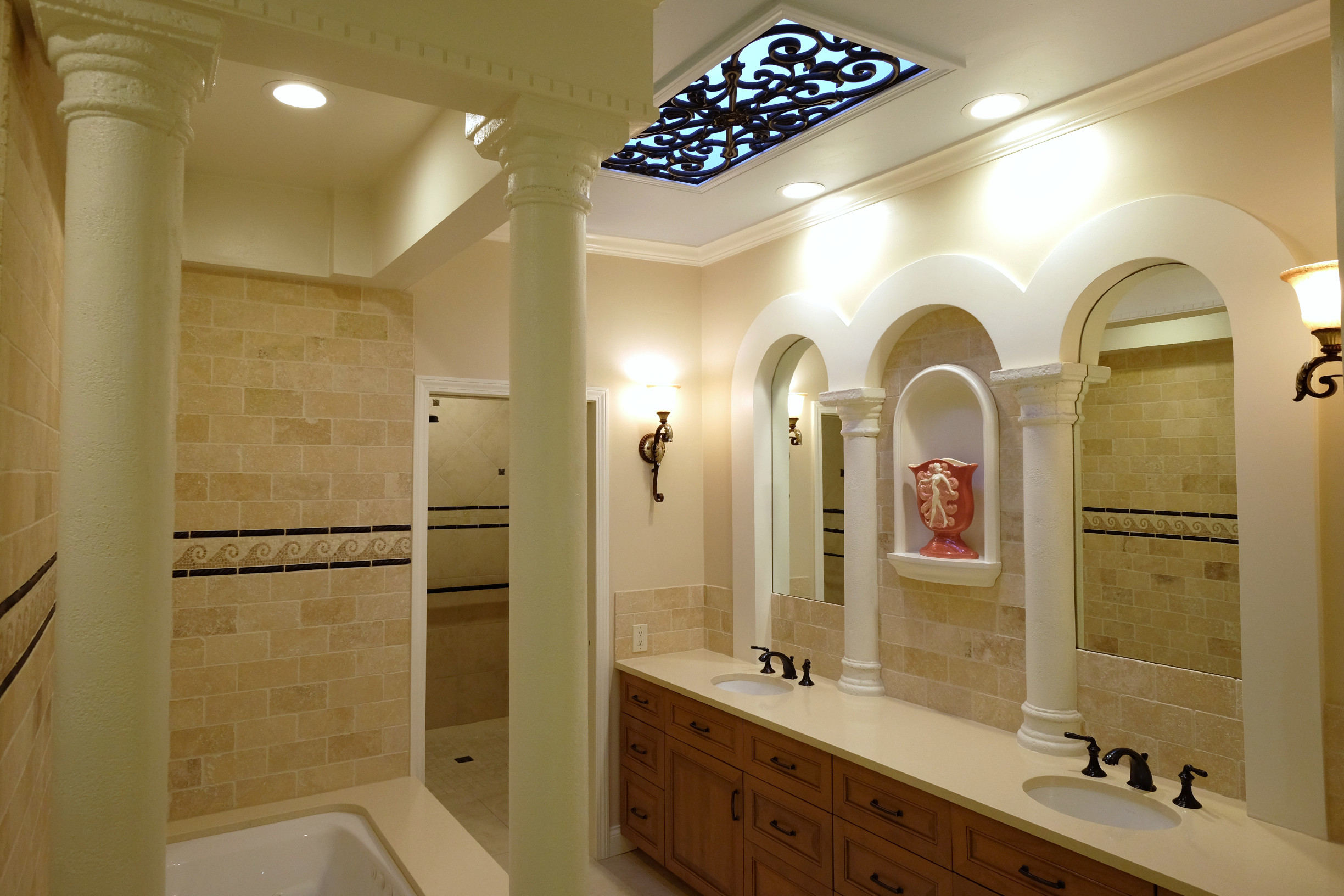
These architectural masterpieces, stretching across the Roman Empire, carried freshwater from springs, reservoirs, and rivers to every corner of the Roman city. The architecture and design of Roman baths combined functionality, aesthetics, and technological innovations to create immersive and luxurious spaces. The meticulous planning, impressive architectural elements, and thoughtful incorporation of various features contributed to the allure and enduring legacy of Roman bath complexes [4].

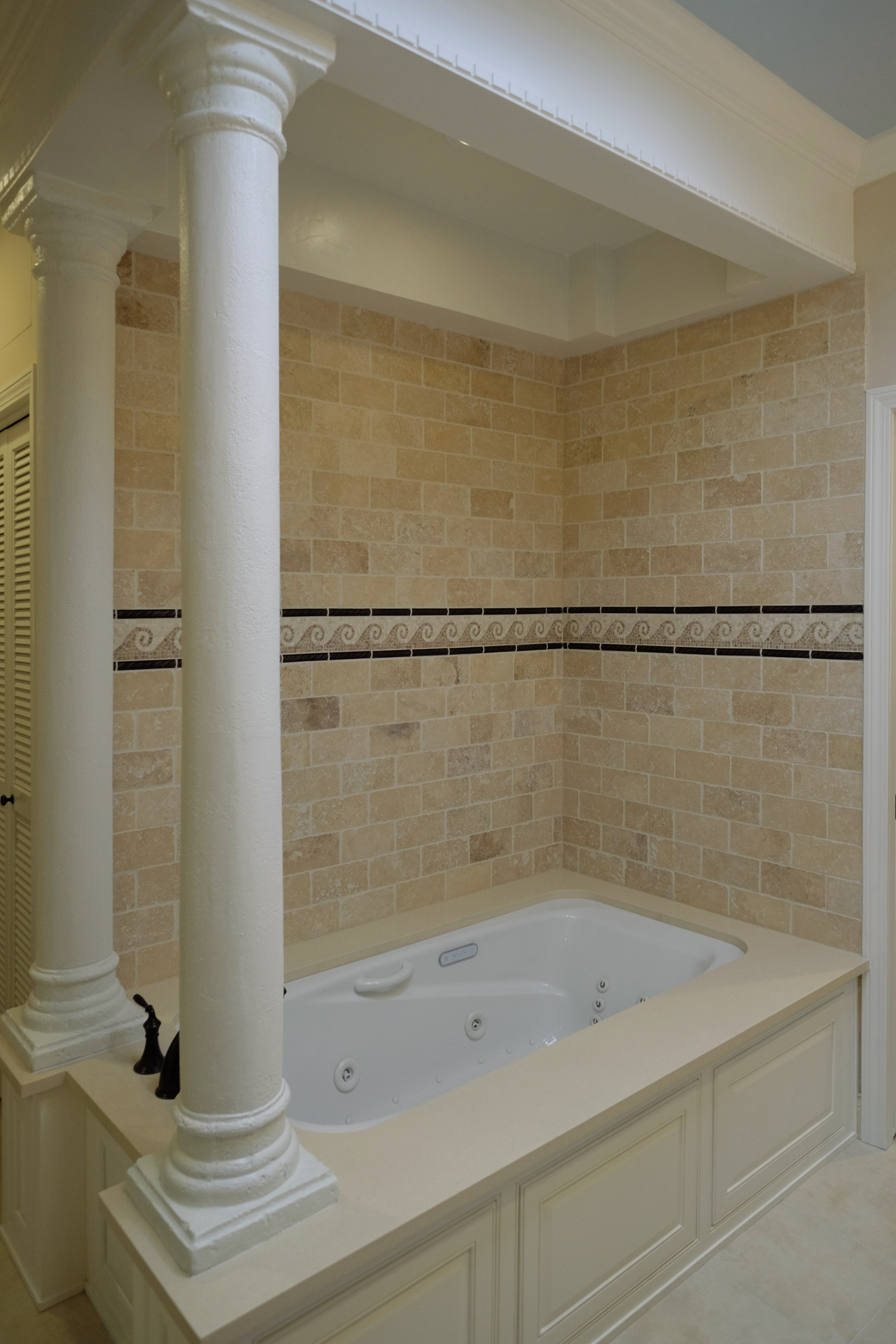
roman style bathroom designs | Glamorous bathroom, Modern bathroom ...
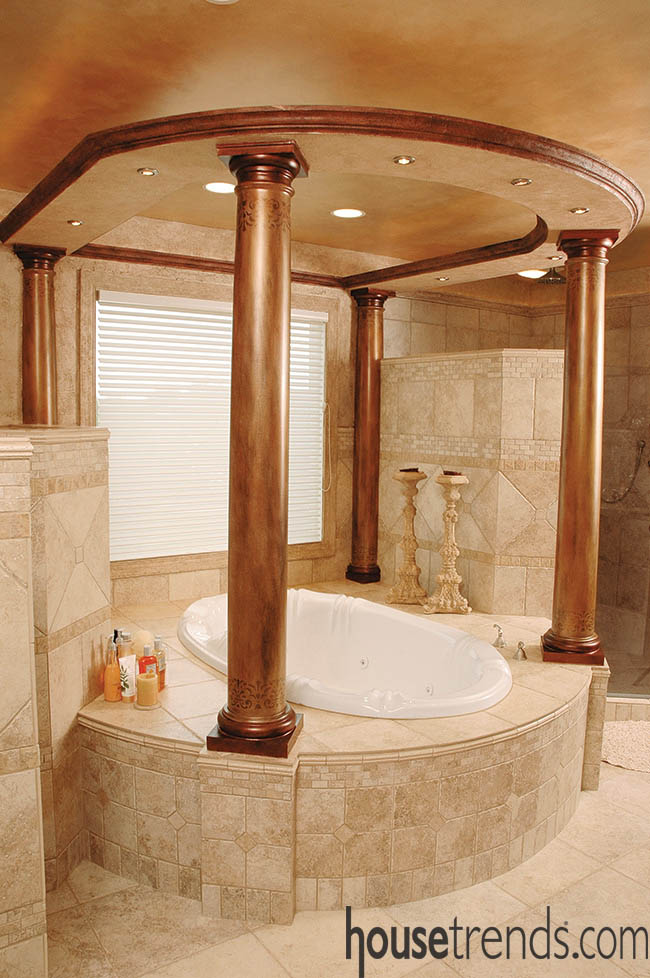
The Roman bath, for instance, included a far more complex ritual than a simple immersion or sweating procedure. The various parts of the bathing ritual (undressing, bathing, sweating, receiving a massage and resting), required separated rooms which the Romans built to accommodate those functions. Bathroom ideas stand the test of timeBathroom ideas create a Roman getaway In a bathroom modeled after a Roman design, even the hardware on the cabinetry helps complete the Roman style.

Roman bath architecture holds significant importance in understanding the social, cultural, and technological advancements of the ancient Roman civilization. Baths were not just a means of relaxation but they were also served as social hubs with cultural and religious significance. Explore the cultural and architectural significance of ancient Roman baths.
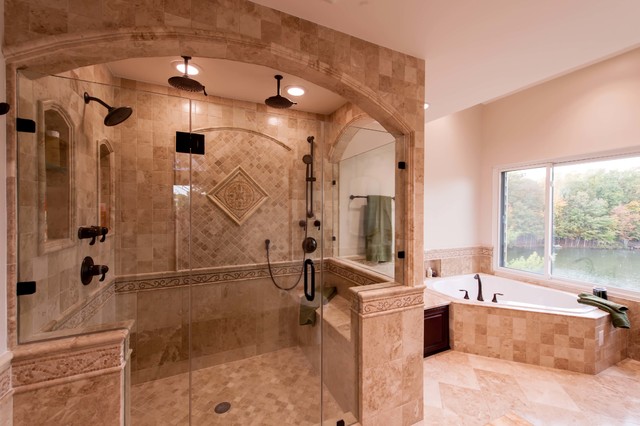
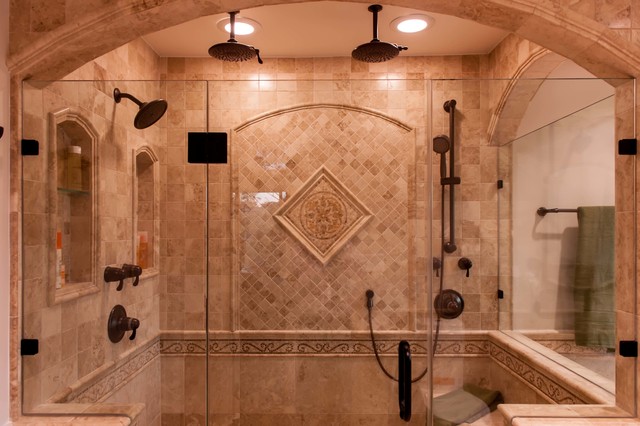
Pin on ROMAN STYLE BATH
Learn about their design, advanced heating systems, and social roles in Roman society, from the caldarium to the frigidarium. Ancient Roman baths were centers for bathing, exercise, business, and pleasure-essential to daily life, leisure, and social interaction. Roman baths were public baths, a program that was an important part of social life in the Roman Empire.

Karen/Flickr A Roman bathroom in Ephesus, near present-day Selçuk, İzmir Province, Türkiye. Known as foricae, Roman public bathrooms were practical facilities where the non-elites could relieve themselves in ancient times. The foricae were open in design, with stone slabs featuring evenly spaced holes for seating.